
Building Sustainability
Sustainability is the cornerstone of Building 777. Guided by Life Cycle Assessment (LCA) carbon accounting, every aspect is chosen with a commitment to responsible design. From low-carbon, non-toxic materials to MEP systems engineered for low energy consumption, all details align with RE2020 compliance and the aspirations reflect CERN’s dedication to a sustainable future.
A Natural Meeting Place: Enabling Mobility and Promoting Collaboration
The building will form the social epicenter of campus life, fostering collaboration and camaraderie among the CERN community. A new plaza connects park areas, forest areas and the warm interior of the building, in the quadruple height atrium an informal working and lounge areas. Workplaces on every level are positioned in close proximity to attractive outdoor areas and nature.

A New Work Environment: Pioneering Responsible Design

The project is committed to low-carbon design and achieving the highest levels of energy efficiency, sustainability, and health and safety certification. The project is targeting a BREEAM Excellent rating, and CERN is enrolled to pursue WELL Certification.
The layout of the offices and laboratory space highlights the circular design principles followed to reduce the impact the building will have on the environment.
The bespoke facade design forms a natural brise soleil, creating an open, light and comfortable working environment inside.
Facts & Figures
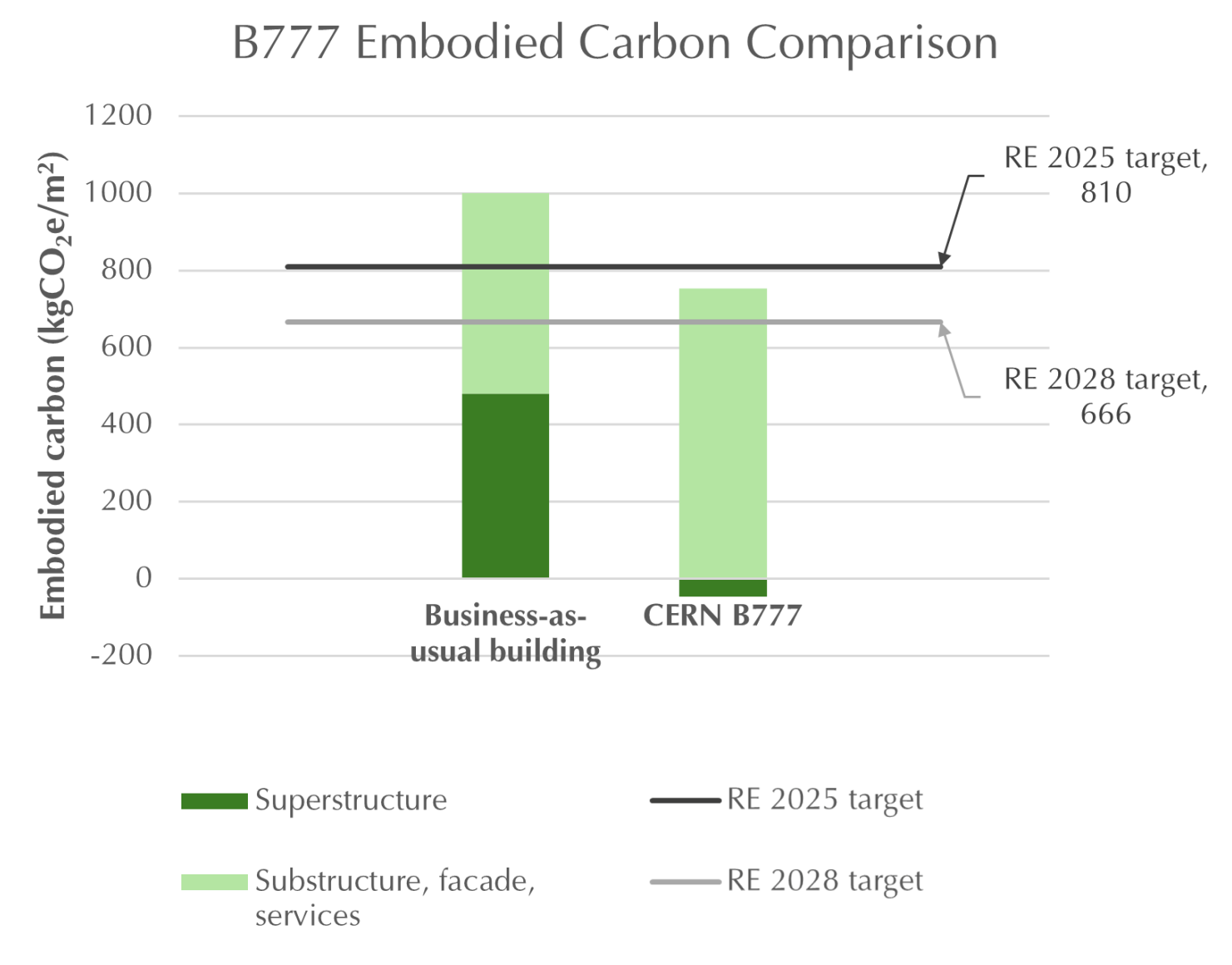
The embodied carbon of a building is a measure of the amount of greenhouse gases emitted into the atmosphere as a result of the construction and operation of the building. A ‘business-as-usual’ concrete building is likely to be around 200 kgCO2e/m2 for the superstructure (the concrete structure, not including foundations). For building 777, a negative value was achieved due to the use of timber, which stores carbon (known as sequestration).
Embodied carbon of the superstructure, including sequestration: -47 kgCO2e/m2
Embodied carbon of the whole building: 754 kgCO2e/m2
The embodied carbon for the whole building includes the carbon emitted as a result of constructing the structure, foundations, facade, floor finishes and technical installations. A ‘business-as-usual’ concrete building is likely to be around 1000 kgCO2e/m2.
Commitment to a Low-Nuisance, Sustainable Construction for Building 777
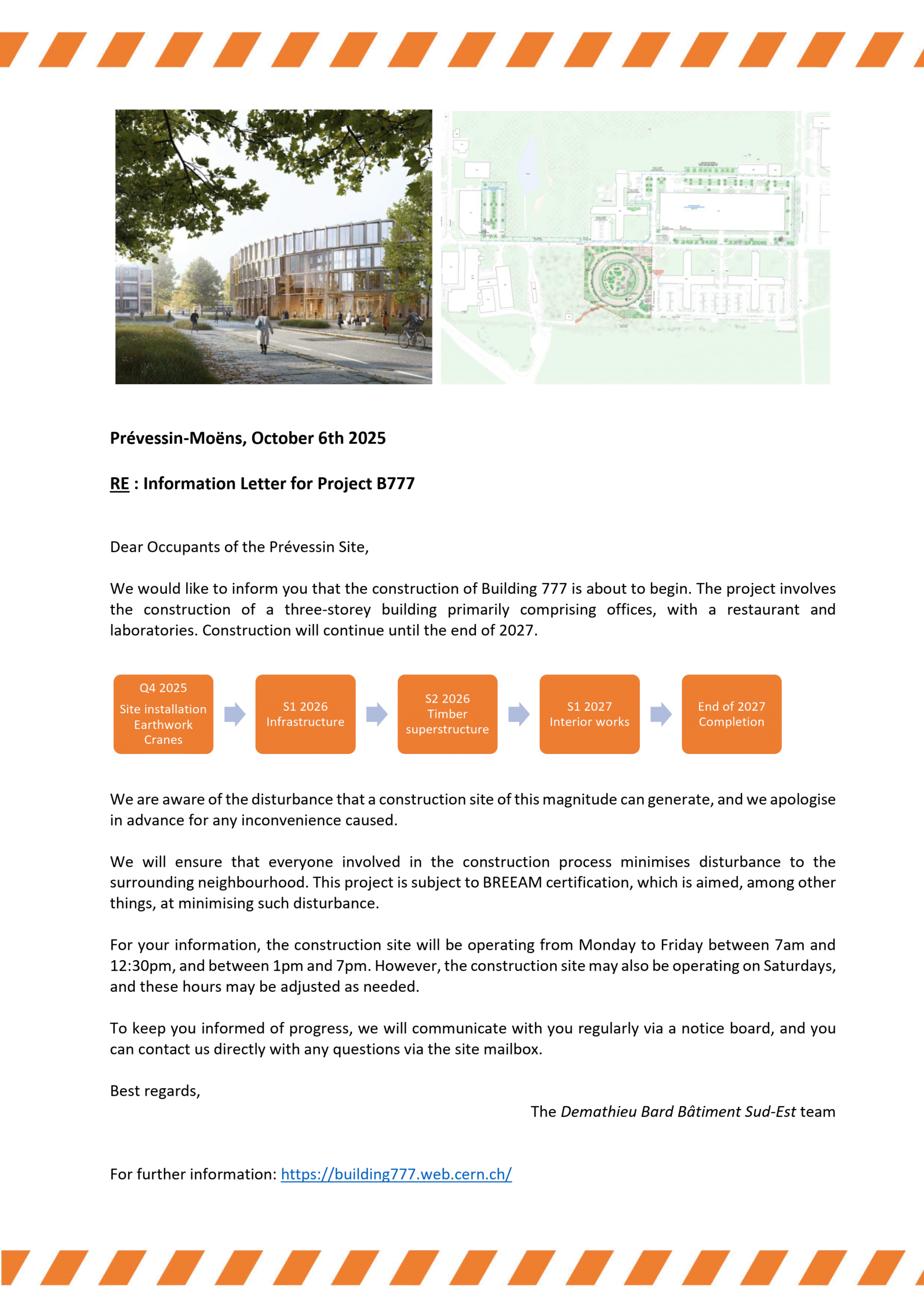
As part of CERN’S dedication to sustainability, and within the framework of the BREEAM and WELL certifications, the contractor responsible of Building 777 construction has committed to adopt a Low Nuisance Construction Site Charter.
As construction activities can impact the daily life of our campus community, this commitment aims not only to address possible environmental hazards, but also at minimizing disturbances such as noise, visual impact, and site access disruptions. The charter ensures that all parties involved will manage the site responsibly and actively consider feedback from the community.
Here you can find an introductory letter from the contractor, Demathieu Bard, addressed to all Prevessin’s users. We appreciate your understanding and collaboration as we work toward a sustainable and considerate building process.